
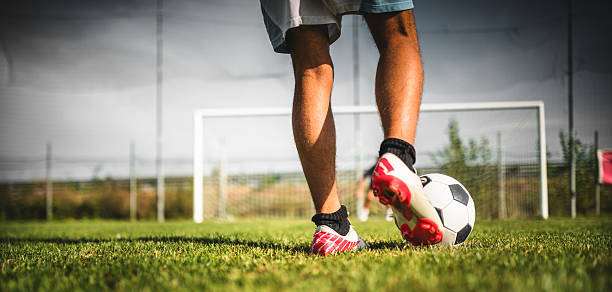
Are you thinking about using football cleats for soccer? If so, you’ve come to the right place!
In this article, we’ll explain the differences between football and soccer cleats and the advantages and disadvantages of wearing football cleats for soccer.
We’ll also provide some tips and alternative options so you can make an informed decision.
So, let’s find out if football cleats are suitable for soccer.
The Differences Between Football and Soccer Cleats
Understanding the differences between the two types of cleats is essential for any athlete looking to excel in their game!
Football and soccer cleats are designed for two distinct sports, and each type of cleat has different features to help the athlete perform their best.
Football cleats have a hard toe cap and feature two to three sets of laces that go up the ankle, providing extra support and protection. They also have more midsole cushioning and a sole that is typically wider than soccer cleats.
Soccer cleats, on the other hand, have a slightly raised toe cap and fewer laces that don’t go up the ankle. They also have less midsole cushioning and a narrower sole. These features help soccer players move quickly and make quick turns on the field.
It’s important to note that both types of cleats should fit snugly, but be comfortable to wear.
Advantages of Wearing Football Cleats for Soccer
Grasping the advantages of sporting football cleats for soccer can provide a competitive edge. Football cleats typically provide better traction than soccer cleats, due to the longer, more aggressive studs on the sole. This can help you stay balanced and keep your footing when maneuvering around the field, especially on wet surfaces.
Furthermore, the stiffer material of football cleats can give you better support and stability when trying to make quick changes in direction. Additionally, football cleats can help you generate more power and speed on the field. The studs on the sole of football cleats are designed to provide more power when pushing off the ground, allowing you to reach higher speeds and generate more power with each stride.
This can be an especially useful advantage in soccer, as it can help you reach the ball faster and take advantage of opportunities to score.
Disadvantages of Wearing Football Cleats for Soccer
If you’re considering wearing football cleats for soccer, it’s important to understand their potential drawbacks.
Firstly, football cleats tend to be heavier than soccer cleats as they feature thicker, stiffer material with more studs. This extra weight can be detrimental to performance, as it can slow down a player and tire them out more quickly.
Secondly, the studs on football cleats are generally longer and fewer in number than those of soccer cleats. While these longer studs may provide more stability on a grass field, they don’t offer much grip on a soccer pitch. Therefore, if you opt for football cleats, you may find yourself slipping and sliding as you try to move around the field with agility.
Tips for Wearing Football Cleats for Soccer
Slip into a pair of football cleats and get ready to move with power and stability on the soccer pitch. While football cleats are not the ideal choice for playing soccer, they can be used if you take the proper precautions and make adjustments to your playing style.
Here are some tips to consider when wearing football cleats for soccer:
- First, make sure the cleats you choose aren’t too heavy. Football cleats are typically heavier than soccer cleats, so the extra weight could affect your overall performance.
- Second, check the studs on the cleats to make sure they’re not too long. Longer studs can cause difficulty in turning and controlling the ball, so you should look for studs that are the same length as soccer cleats.
- Finally, practice with your new cleats to get used to the different feel. This will help you adjust to the difference in traction and stability that football cleats offer.
Alternatives to Wearing Football Cleats for Soccer
Gaining an understanding of the alternatives to wearing football cleats for soccer can help you make an informed decision when selecting your footwear.
Soccer cleats are designed specifically for soccer, and provide the traction and comfort you need to move quickly and safely on the field. The cleats are usually made of lighter material to help you move faster and have a flat sole that provides a better grip on the ground. Additionally, soccer cleats are equipped with a toe cleat, which helps you control the ball better and gives you better balance.
If you don’t want to wear soccer cleats, you can also opt for turf shoes. Turf shoes are designed for artificial turf, and provide good traction and stability on the field. They are usually made of thicker material than soccer cleats, which helps absorb shock and reduce the risk of injury. Additionally, turf shoes provide more cushioning, which helps reduce the impact of running and jumping on the surface.
Turf shoes are also less likely to cause blisters, as they are designed with a wider fit than soccer cleats.
Conclusion
You can wear football cleats for soccer, but it’s not ideal.
Football cleats are designed for traction on grass, while soccer cleats are designed for traction on artificial turf.
Football cleats also have studs that are too long and sharp for soccer, which can lead to injury.
If you’re going to wear football cleats for soccer, make sure you adjust the studs to a shorter length and use a shoe insert to keep your foot comfortable.
If you’re looking for a better option, soccer cleats are designed specifically for the sport and will give you the best performance.